Next stop was outside Montgomery Alabama. We spent a week in the area. Montgomery is the capital of Alabama and one day we walked the area. We strolled by the capital building.


We also saw the Dexter Avenue King Memorial Baptist Church where Reverend Martin Luther King Jr served as pastor from 1954-60. This was also the church where the Montgomery Bus Boycott was organized in December of 1955. The boycott was a political and social campaign against the policy of racial segregation on the public transit system in Montgomery. The boycott lasted from the Monday after Rosa Parks was arrested for not giving up her seat on the bus to over a year later when the US Supreme Court ruled the Alabama and Montgomery laws that segregated buses were unconstitutional. In reference to the Reverend’s famous ‘I Have a Dream’ speech there is also a building depicting pictures of people who ‘Are the Dream’.


We strolled along the Alabama River. This river starts about 6 mile north of Montgomery and ends about 45 miles from Mobile after passing Selma. It is more of a meandering river that was once home to the Creek Indians.


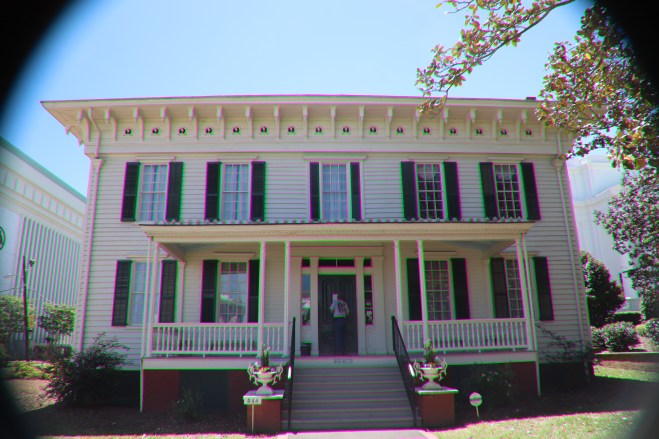
Montgomery was the first capital of the confederacy before it moved to Richmond in the summer of 1861. The house below is where Jefferson Davis and his family lived until that move. It is known as the First White House of the Confederacy. We were not able to see inside as it was closed when we came by.
The Museum of Alabama located near the capital building. The museum covers Alabama history from the 1700s to the 21st century.


While outside Montgomery we took a trip to the Tuskegee Airmen National Historic Site at Moton Field. Moton Field was the primary flight training for the Tuskegee Airmen in WWII. They structured the site the way it looked during that time.


Fort Toulouse and Fort Jackson are located near the city of Wetumpka between the Coosa and Tallapoosa Rivers which join together below the area to form the Alabama River. Fort Toulouse was a French fort founded in 1717 to counter the growing British interest. Creek Indians lived in the same area. During the War of 1812 and the Creek War, General Andrew Jackson spent some time at the fort and determined it was not worth salvaging and ordered the building of Fort Jackson nearby. Reconstruction of Fort Toulouse has been completed and reconstruction of Fort Jackson is in progress.
Fort Toulouse


Fort Jackson


Creek Indian Mound


Next up a month in Georgia, stay tuned.
 Fran and Jeff’s Retirement Adventures